Lesson 2: Candle Intent and Multi-Timeframe Alignment
Beginner LevelPublished: September 15, 2025
Lesson 2: Candle Intent and Multi-Timeframe Alignment
Learning outcomes: Read intent from candles, align timeframes, and avoid trading noise.
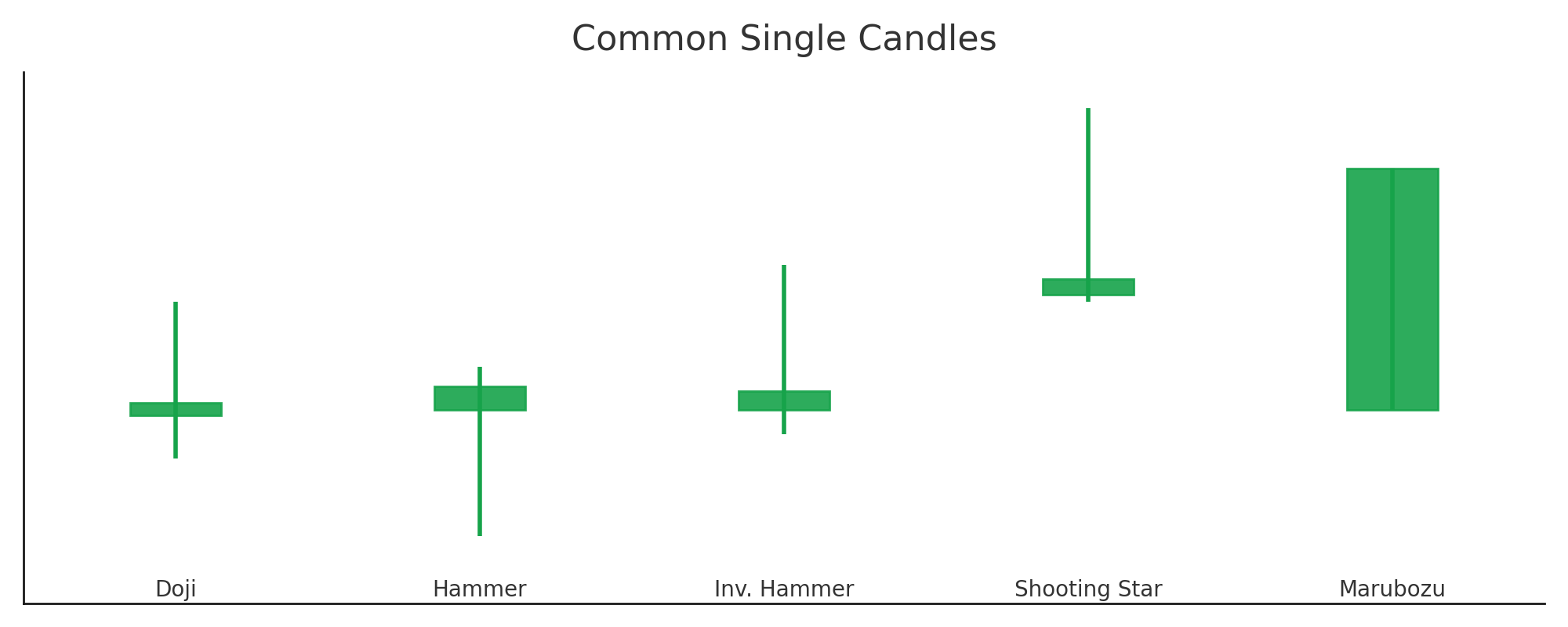
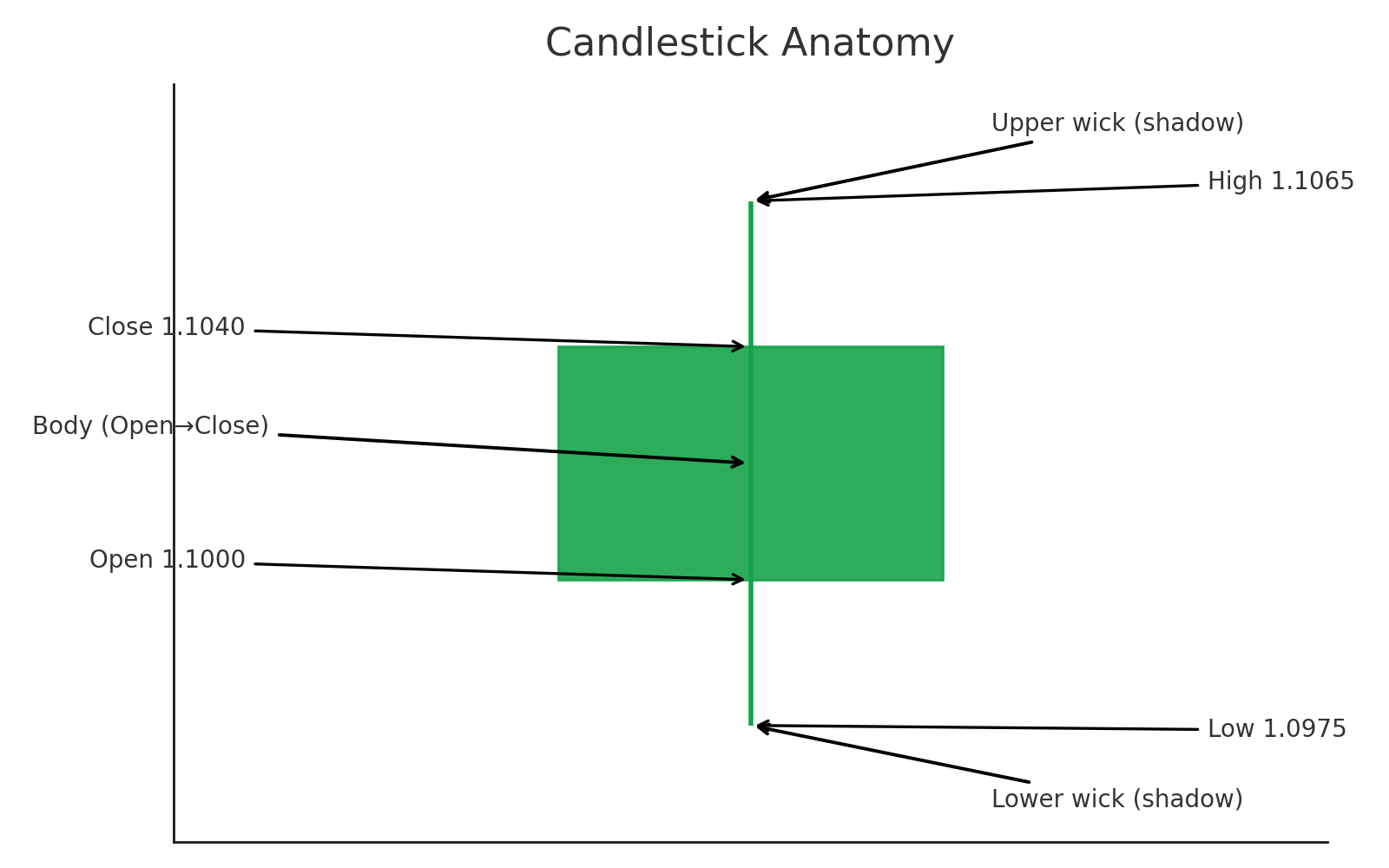
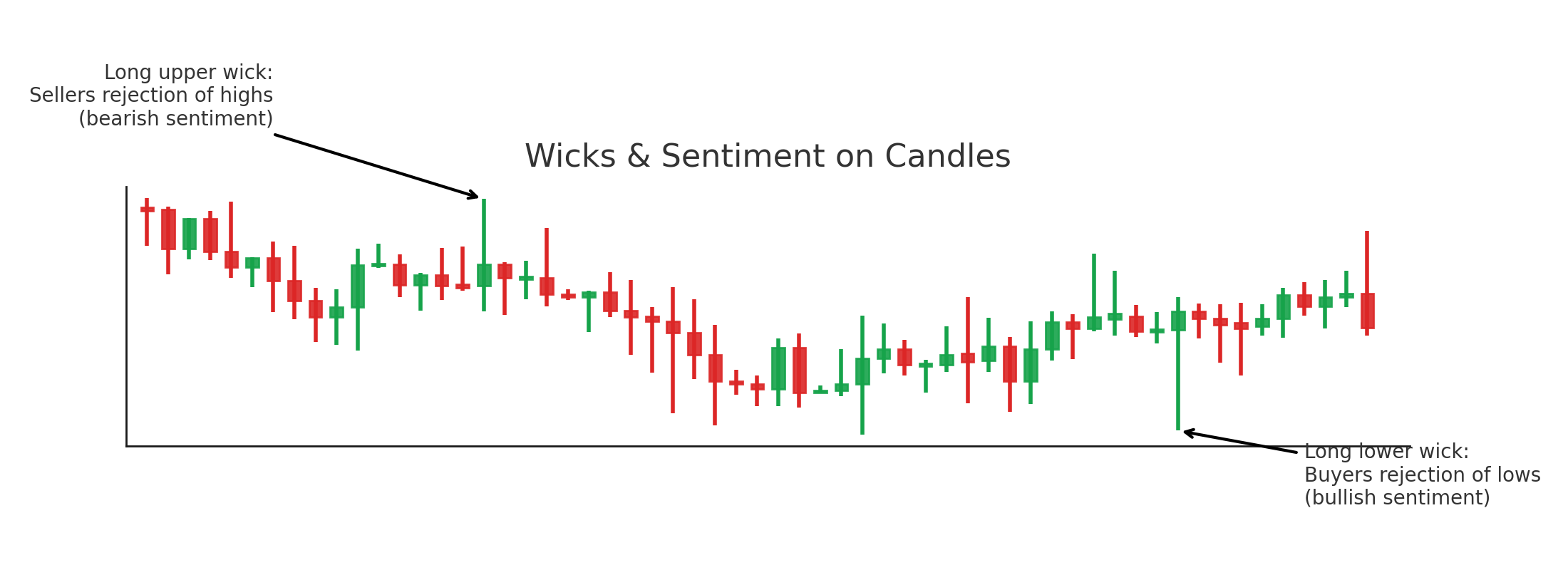
Candles show order flow. A large body tells you who won; a long wick tells you where price was rejected.
Candles only matter at levels. A perfect pattern in the middle of a range is usually noise.
Core concepts
- Body size indicates conviction; wicks indicate rejection or absorption.
- Context first: level + session + trend.
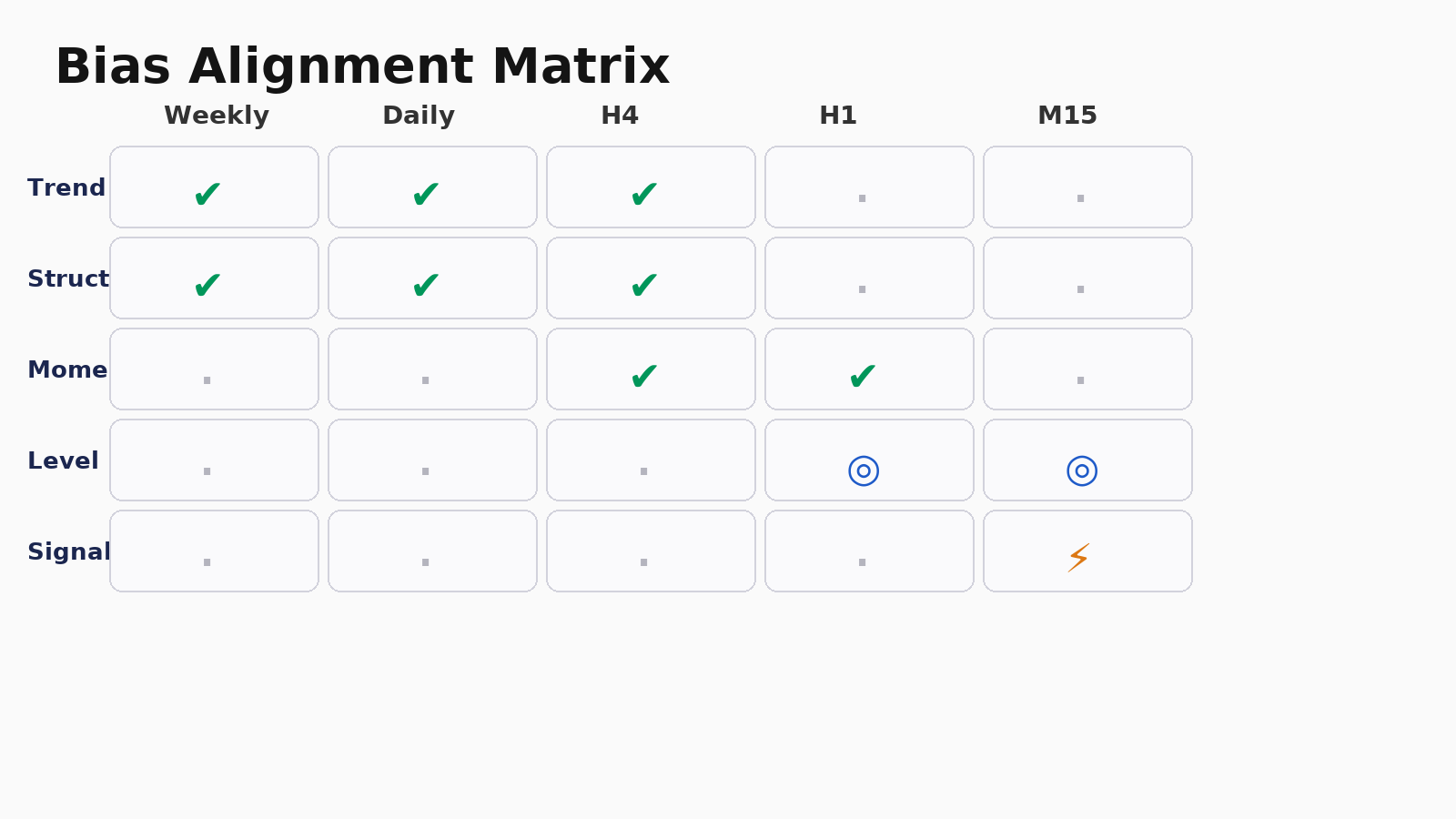
- Three timeframe stack: bias, setup, entry.
- Confirmation: wait for a close or a break and retest.
- Fewer triggers, higher quality.
Execution framework
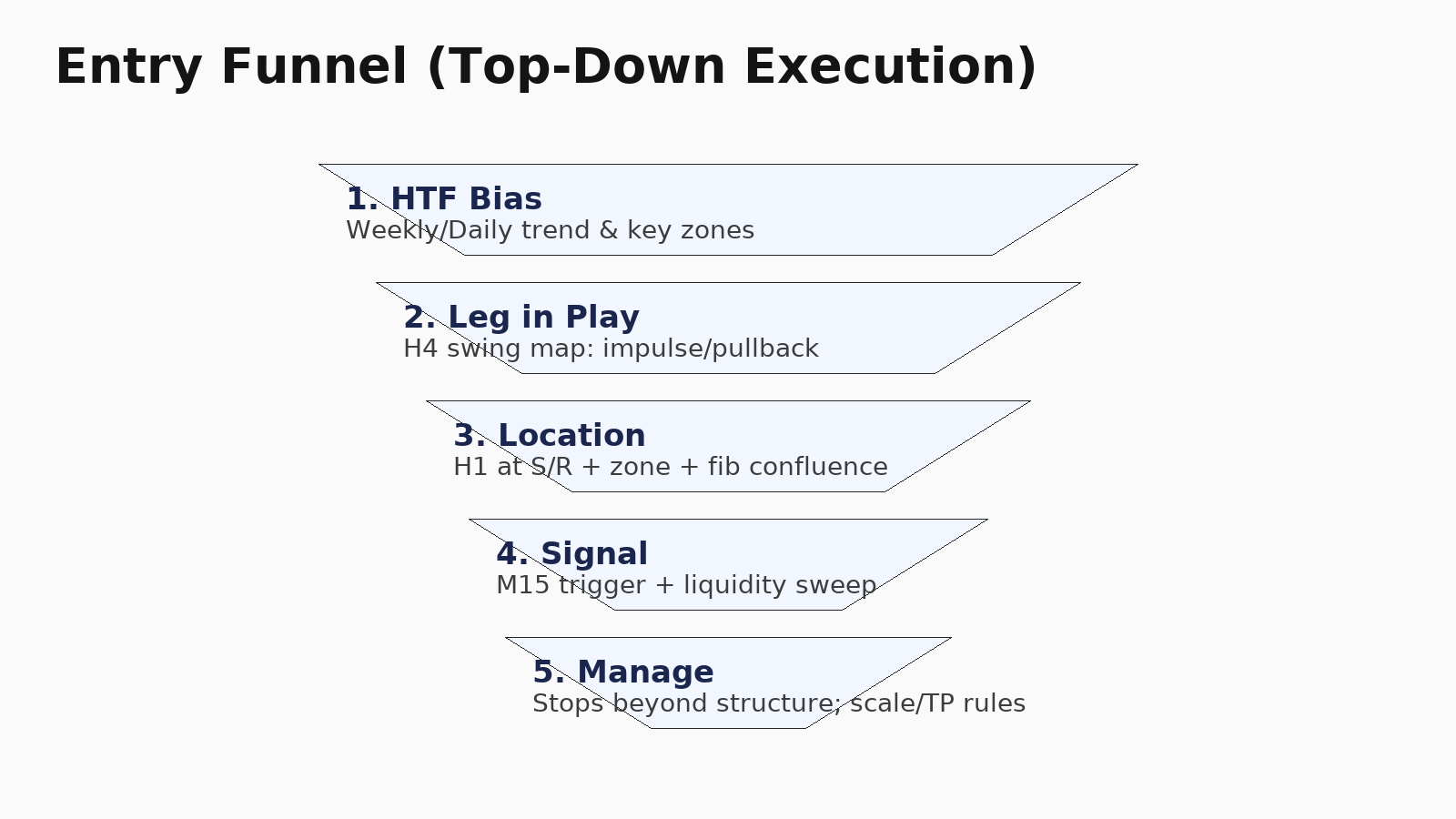
- Define bias on H1 or H4.
- Pick a level with clear liquidity or structure.
- Look for an intent candle on the setup timeframe (M15).
- Confirm with a break or a retest.
- Execute with a stop beyond invalidation.
Annotated walkthrough
Example: a bearish rejection wick at a daily resistance during London.
- Mark the resistance level on H1.
- Wait for a rejection candle on M15.
- Confirm with a lower low or a break of the candle low.
- Enter on the retest and target the next structure level.
Common mistakes
- Trading patterns without levels.
- Entering before the candle closes.
- Ignoring session timing and liquidity.
- Using too many triggers at once.
Checklist
- HTF bias is clear.
- Level is defined and fresh.
- Session supports momentum.
- Signal candle shows intent at the level.
- Confirmation occurred.
- Stop is placed beyond invalidation.
Practice drills
- Annotate 20 candles with intent labels and context notes.
- Find 5 failed patterns and explain why they failed.
- Build a personal trigger list of 2 candles you will trade.
Pro tips
- If you did not see a close, you did not get a signal.
- Alignment matters more than frequency.
- One clean signal beats ten weak ones.
Annotated Chart Pack
5+ annotated examples for this topic.
Download the lesson pack for offline study and practice.
Lesson Quiz
Pass mark: 80%