Lesson 3: Risk Engine - Position Sizing, Stops, and R-Multiples
Beginner LevelPublished: September 15, 2025
Lesson 3: Risk Engine - Position Sizing, Stops, and R-Multiples
Learning outcomes: Protect capital, size every trade correctly, and measure performance in R.
Risk is the only part you control. If you control risk, you control survival and long-term compounding.
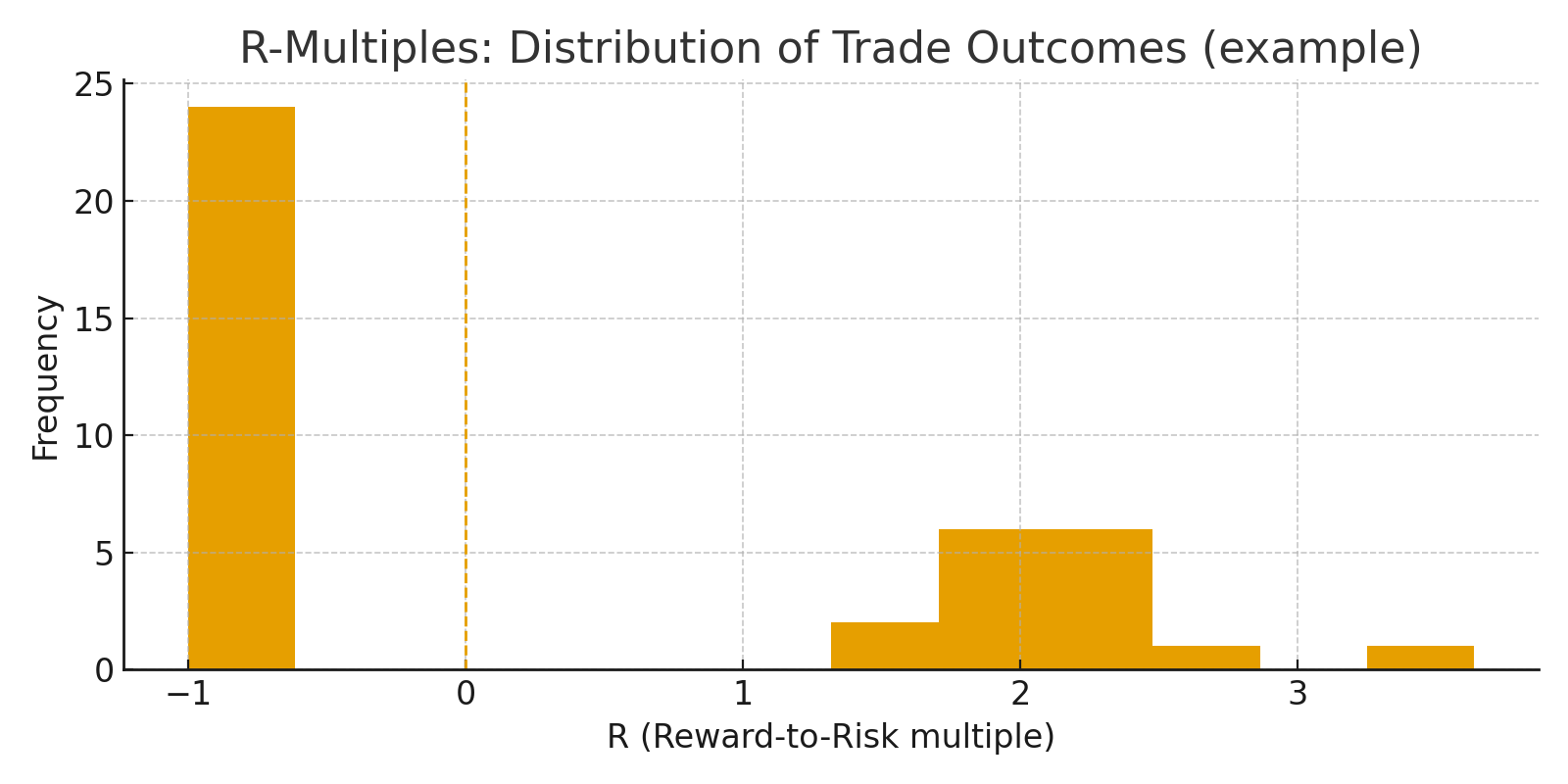
R-multiples let you compare trades without emotion. A win is only a win if it beats your risk.
Core concepts
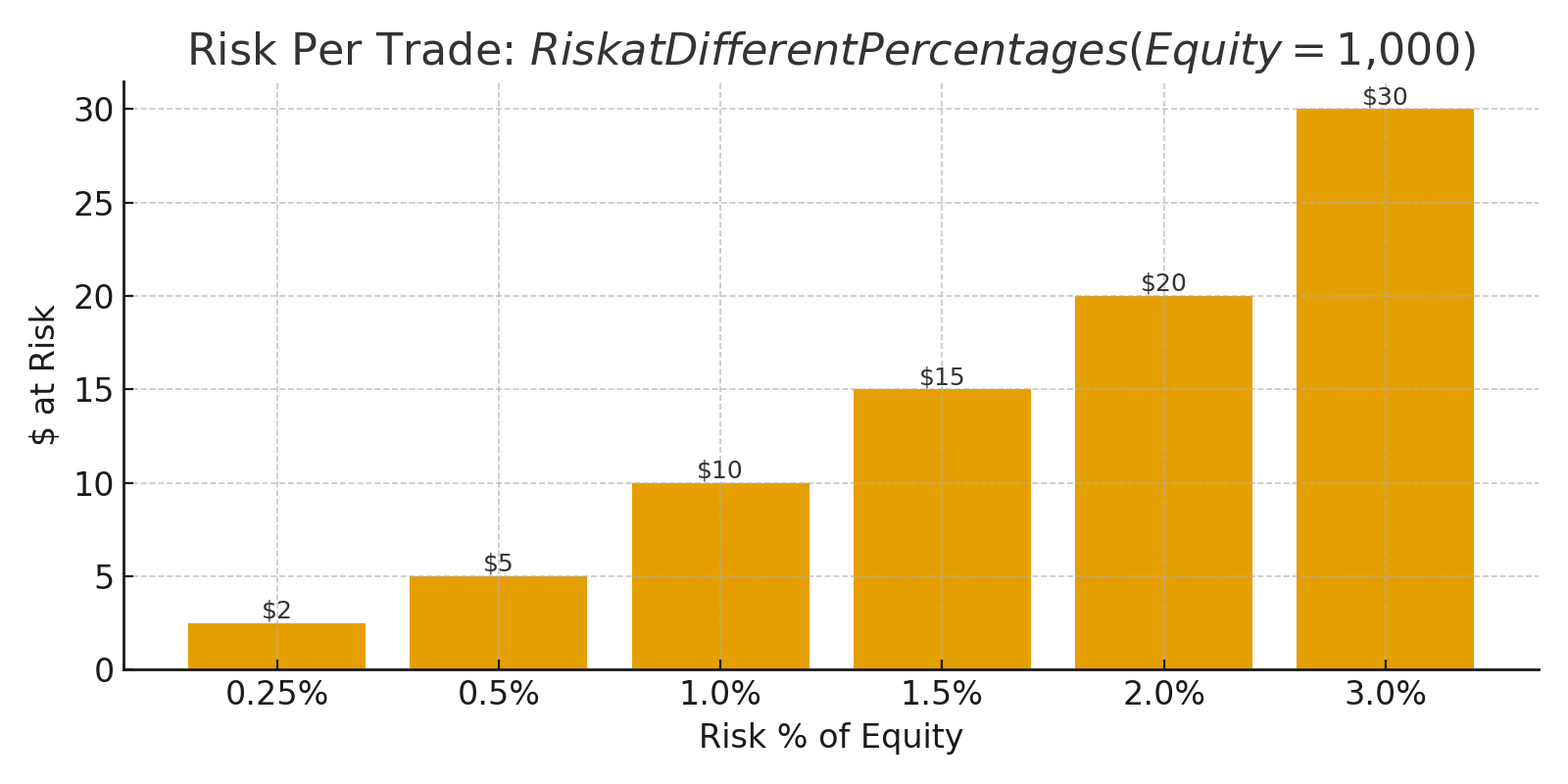
- Fixed fractional risk (0.5 to 1.0 percent while learning).
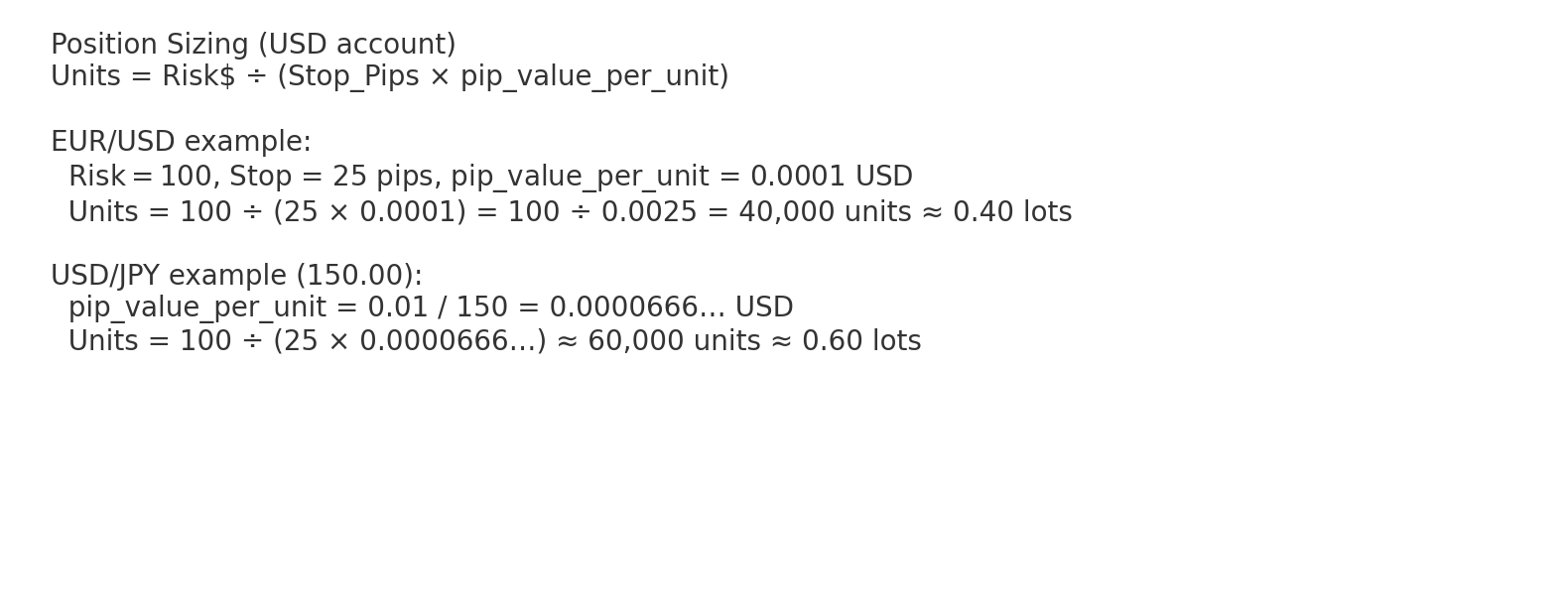
- Position sizing = Risk / (Stop pips x pip value).
- Stops placed beyond invalidation, not inside the zone.
- ATR to validate stop distance.
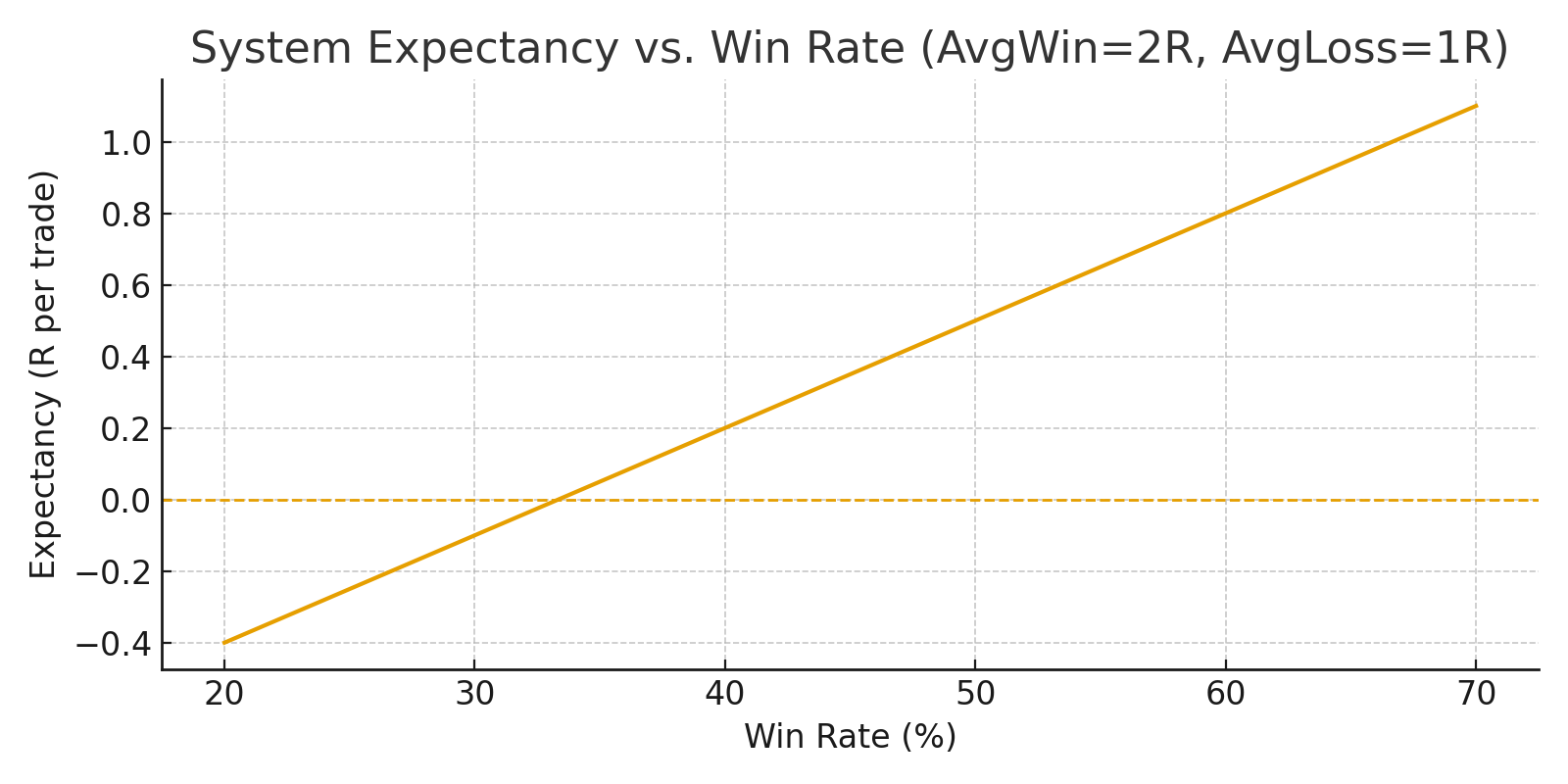
- Expectancy = win rate x avg win - loss rate x avg loss.
Execution framework
- Define your risk per trade.
- Find the invalidation level and set the stop.
- Compute position size using the formula.
- Define the target in R (start with 1.5 to 2R).
- Log the trade in R after it closes.
Annotated walkthrough
Example: GBPJPY with a 30 pip stop and 1 percent risk.
- Risk 1 percent of account balance.
- Stop is 30 pips beyond the invalidation level.
- Size the trade so 30 pips equals 1 percent risk.
- Target 2R to keep expectancy positive.
Common mistakes
- Moving stops to avoid a loss.
- Increasing size after a loss.
- Ignoring spread and slippage in your risk.
- Tracking P/L in dollars instead of R.
Checklist
- Risk percent defined.
- Stop beyond invalidation.
- Position size calculated.
- Target set in R.
- Max daily loss rule set.
- Trade logged with R outcome.
Practice drills
- Calculate size for 5 different stop sizes.
- Backfill 10 trades and compute average R.
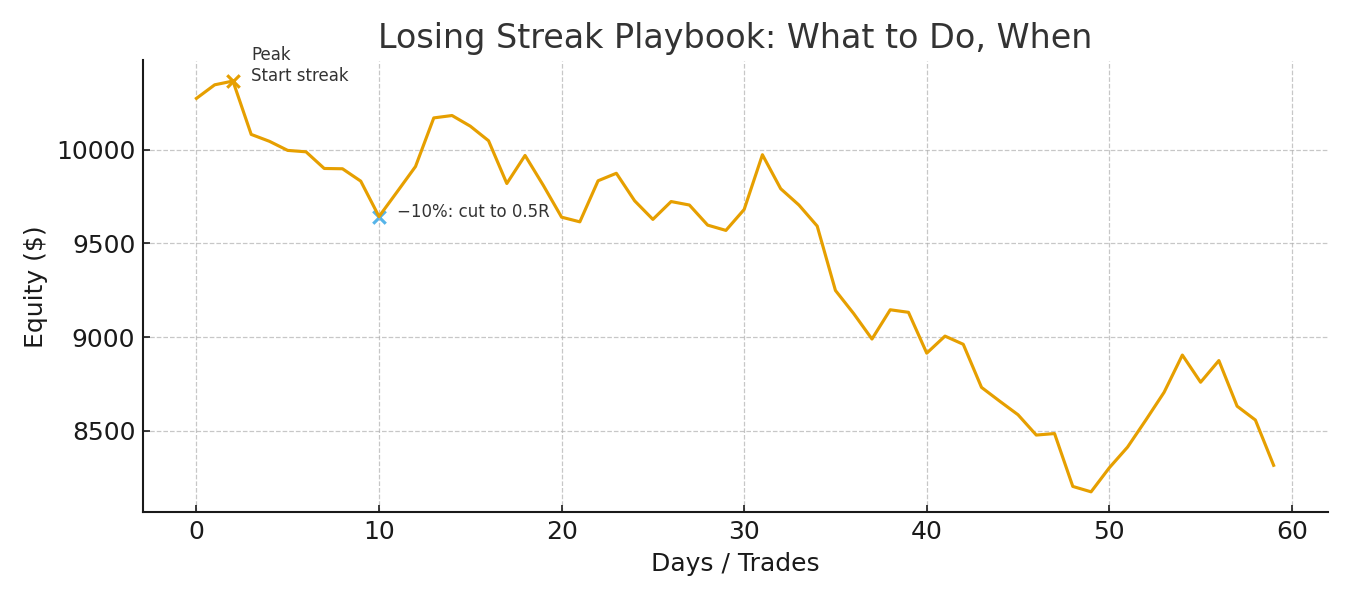
- Simulate a 5 loss streak to confirm risk tolerance.
Pro tips
- Consistency beats intensity.
- R-multiples remove emotional bias.
- Never let one trade decide your month.
Annotated Chart Pack
5+ annotated examples for this topic.
Download the lesson pack for offline study and practice.
Lesson Quiz
Pass mark: 80%