Lesson 13: Build a Beginner Strategy Framework
Beginner LevelPublished: September 18, 2025
Lesson 13: Build a Beginner Strategy Framework
Learning outcomes: Design a simple strategy with clear rules, triggers, and risk management.
A strategy is a repeatable decision system. It tells you when to trade, where to enter, and when to exit.
The best beginner strategies are simple, with clear rules and few variables.
Core concepts
- Define market and session focus.
- Specify setup and trigger conditions.
- Define risk and management rules.
- Use confluence to improve probability.
- Document everything in a playbook.
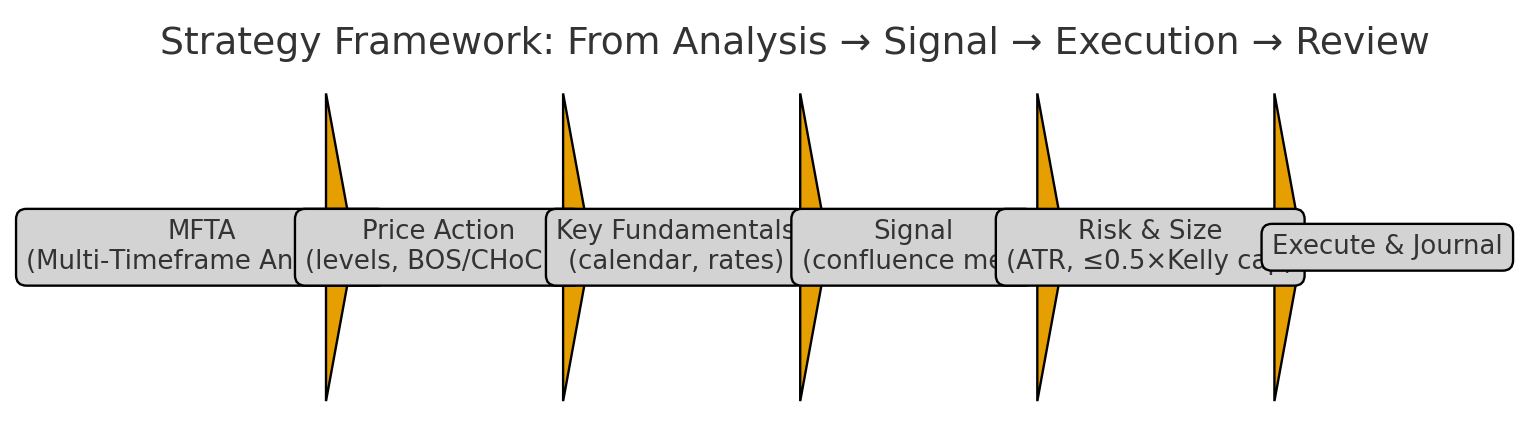
Execution framework
- Pick one market and one session.
- Define setup: level, trend, and trigger.
- Define risk: stop and position size.
- Define target and management rules.
- Backtest before scaling.
Annotated walkthrough
Example: trend pullback strategy with a single trigger.
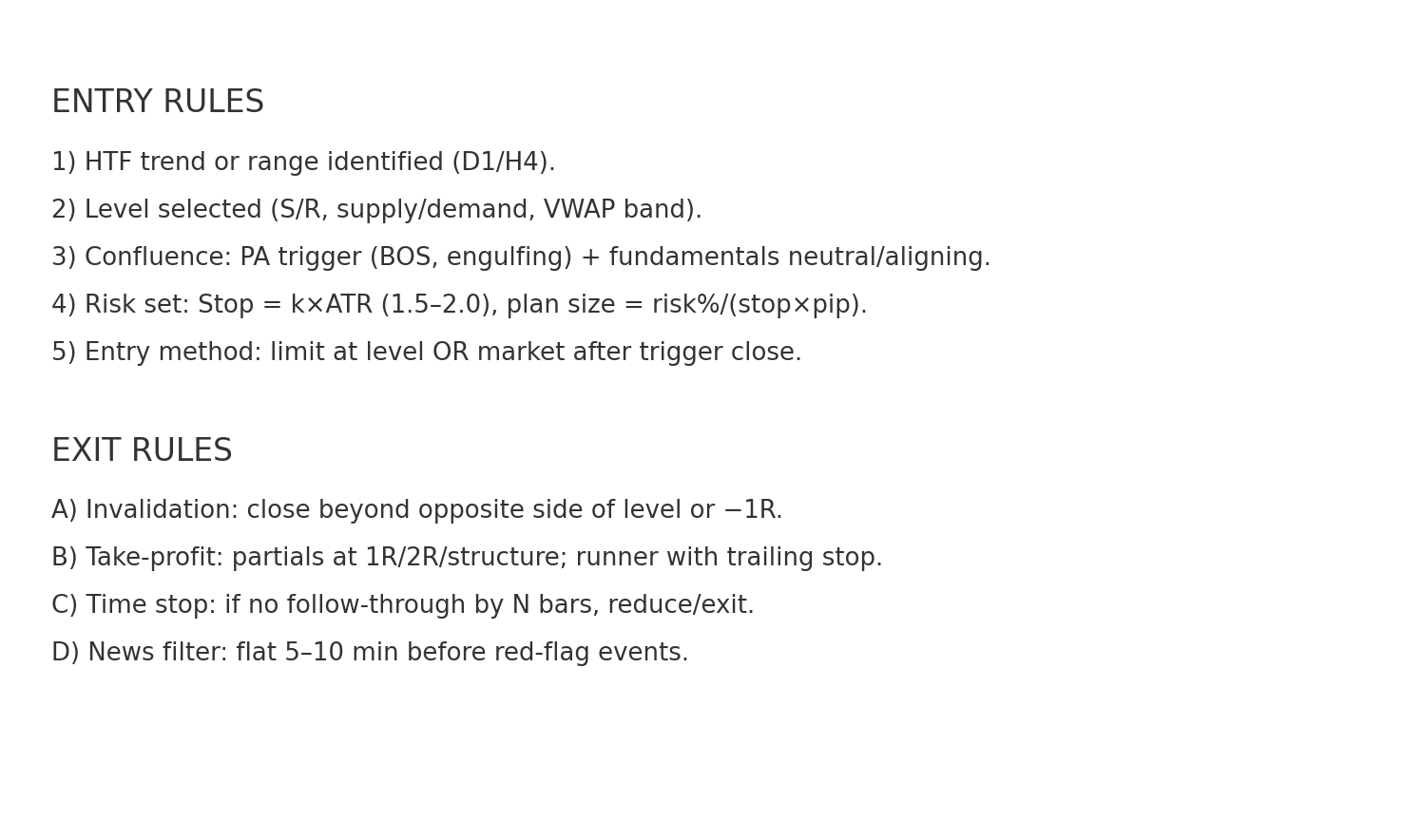
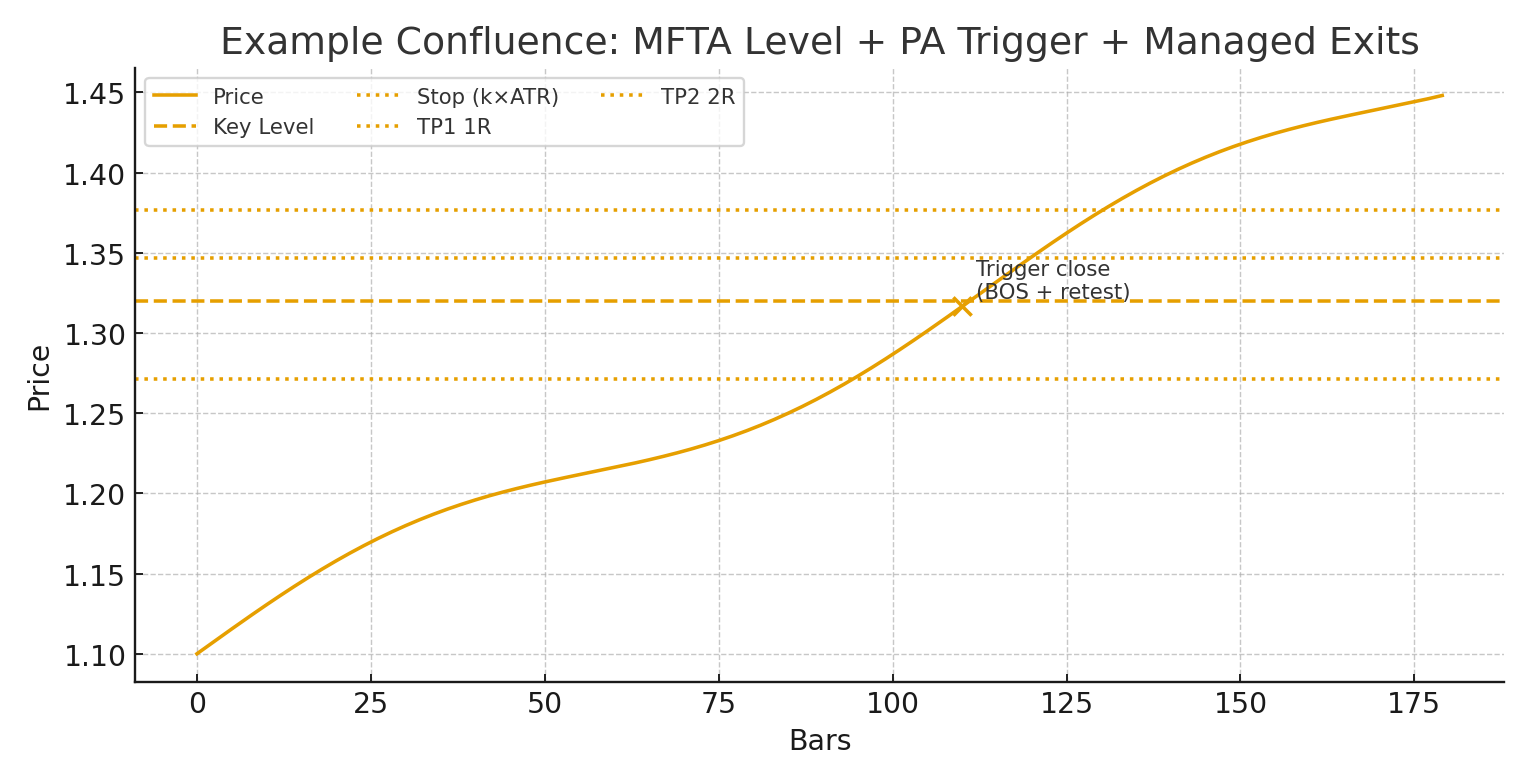
- Bias from H1 trend.
- Entry at a fresh pullback zone.
- Trigger with rejection candle.
- Stop beyond structure, target 2R.
Common mistakes
- Rules that are too vague.
- Changing the setup mid-trade.
- Overcomplicating indicators.
- Skipping backtests.
Checklist
- Market and session defined.
- Setup rules written.
- Trigger rules defined.
- Risk and management rules set.
- Playbook saved.
Practice drills
- Write a one-page playbook.
- Backtest the strategy for 30 trades.
- Refine only after a full sample.
Pro tips
- Simple strategies are easier to execute.
- If it is hard to explain, it is hard to trade.
- Clarity beats complexity.
Annotated Chart Pack
5+ annotated examples for this topic.
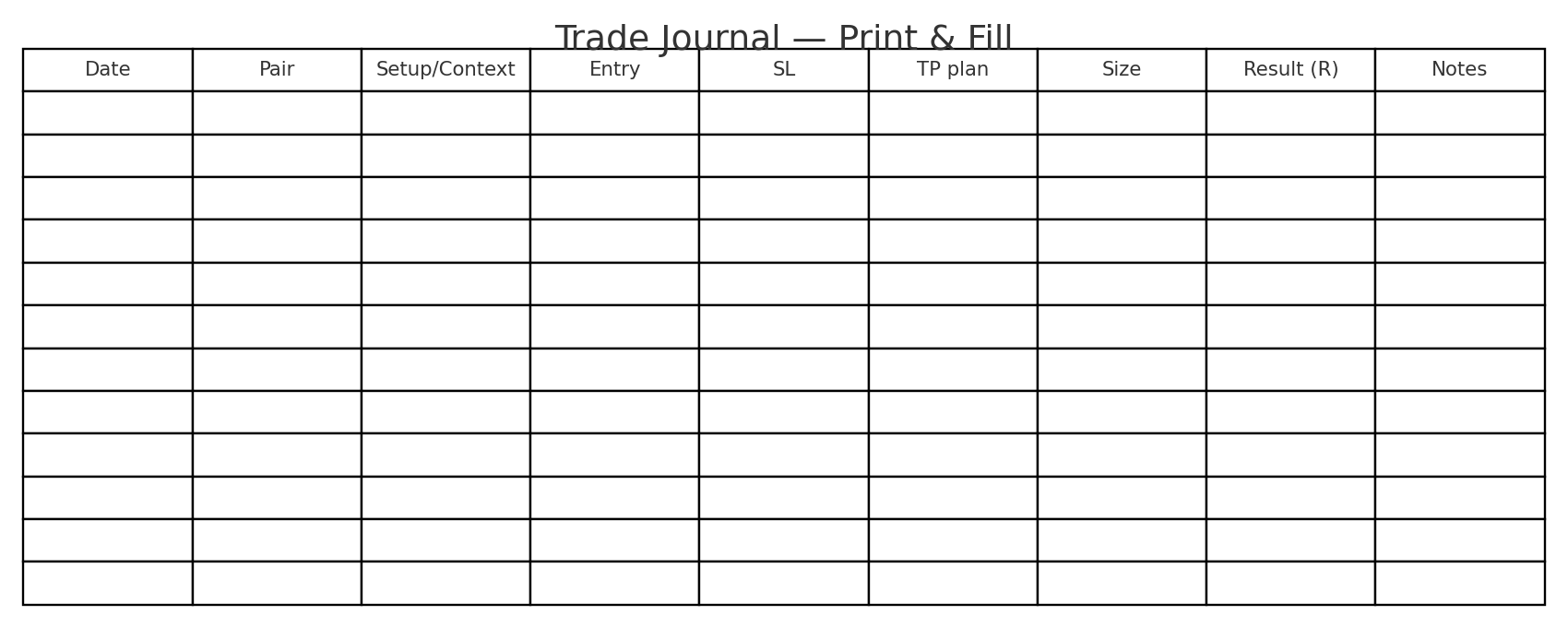
Download the lesson pack for offline study and practice.
Lesson Quiz
Pass mark: 80%