Lesson 9: Indicators as Confirmation, Not Crutches
Beginner LevelPublished: September 17, 2025
Lesson 9: Indicators as Confirmation, Not Crutches
Learning outcomes: Use a small indicator set to confirm structure and momentum.
Indicators are tools, not signals. Your edge still starts with structure and levels.
Pick one trend indicator and one momentum indicator. More is noise.
Core concepts
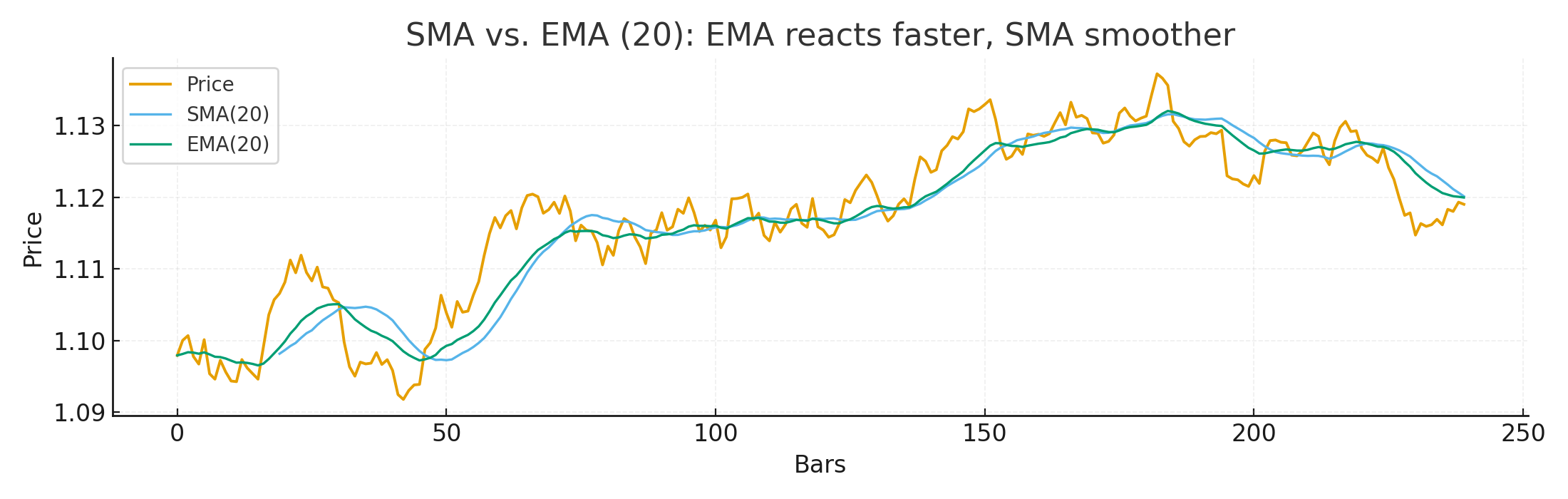
- EMA reacts faster, SMA smooths longer trends.
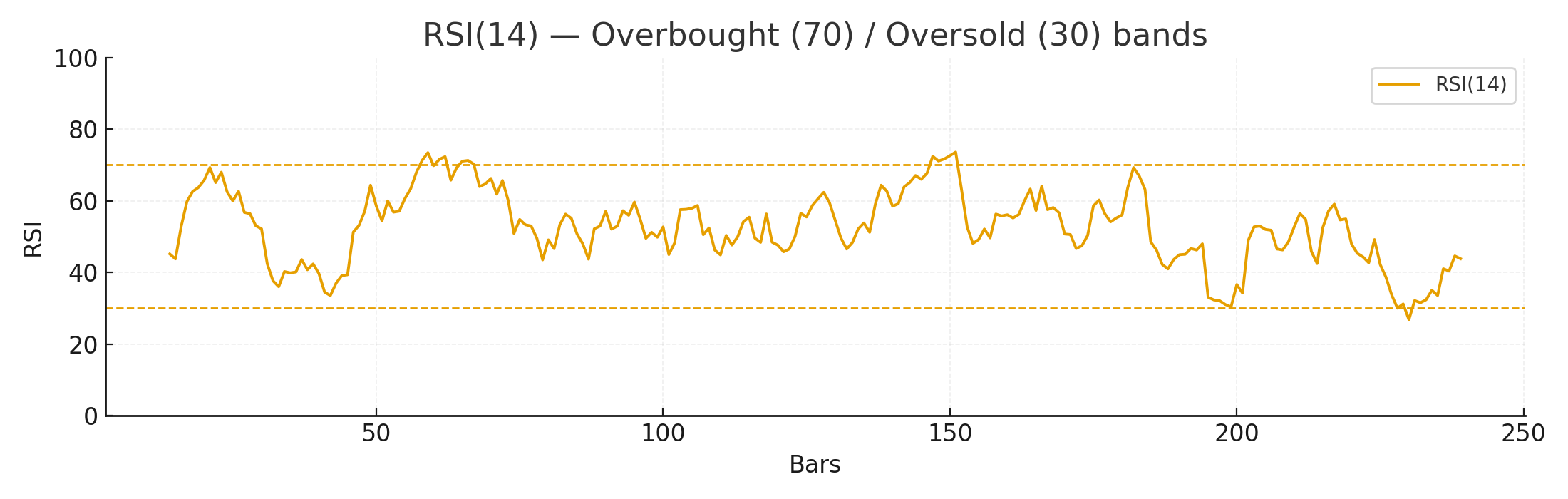
- RSI highlights momentum extremes but needs context.
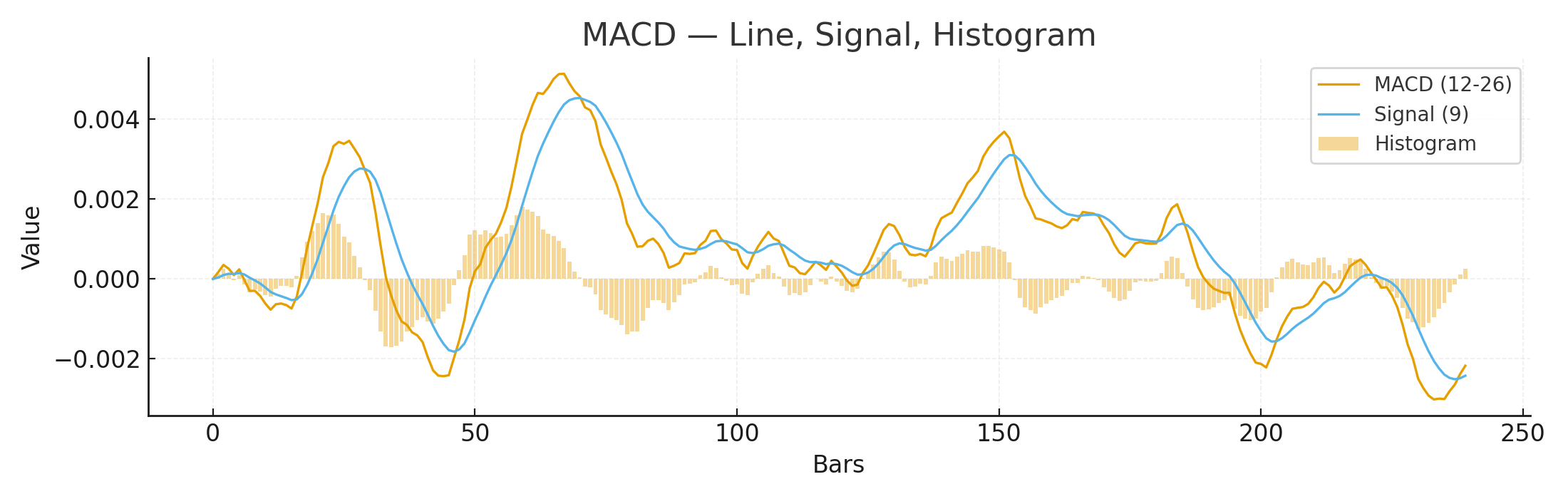
- MACD shows momentum shifts and divergence.
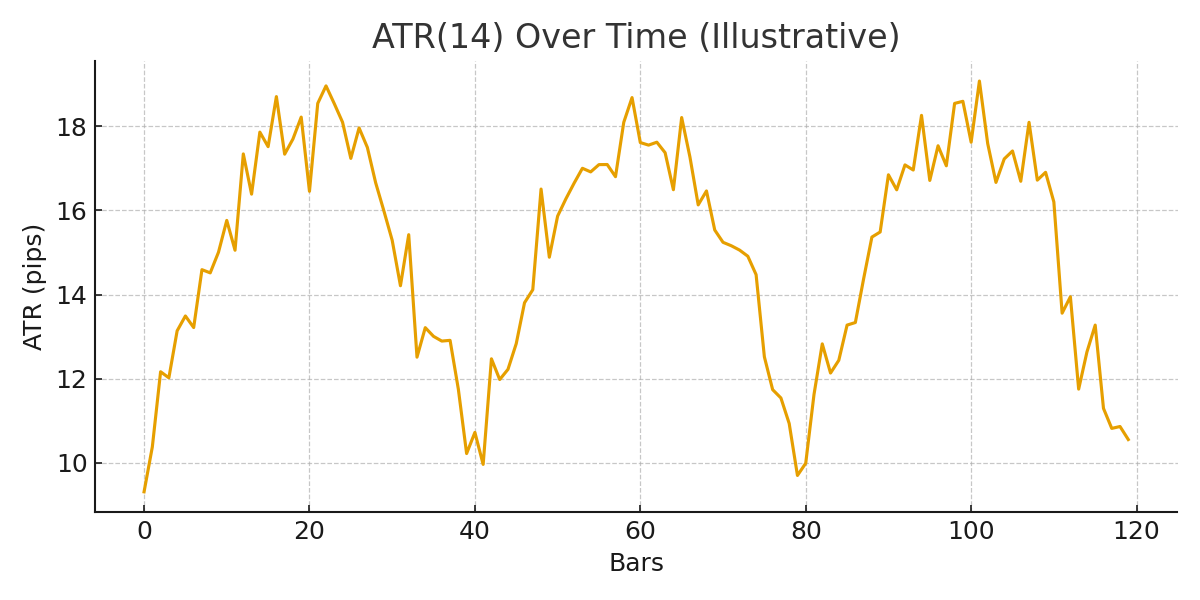
- ATR helps normalize stop sizes.
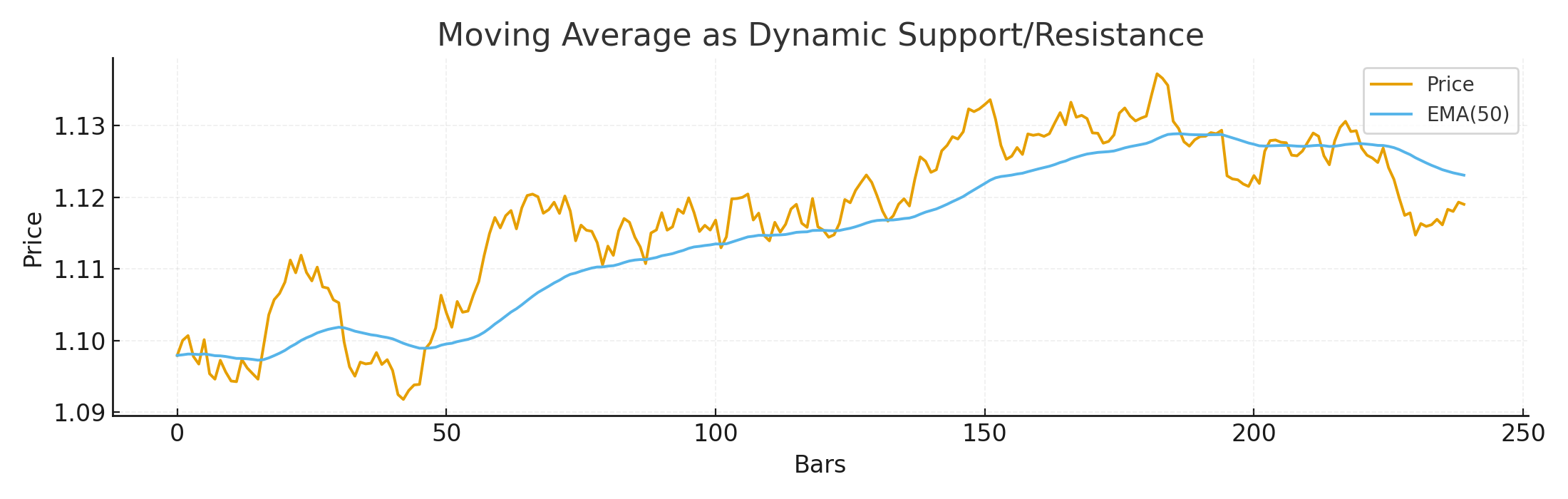
- Dynamic support and resistance can align with MAs.
Execution framework
- Identify structure first.
- Use MAs to confirm trend direction.
- Use RSI or MACD to confirm momentum shift.
- Enter on structure-based triggers.
- Use ATR to validate stop size.
Annotated walkthrough
Example: uptrend confirmed by EMA slope and RSI pullback.
- Confirm higher timeframe trend with MA slope.
- Wait for RSI to reset while structure holds.
- Enter on a structure break or retest.
- Target the next liquidity level.
Common mistakes
- Trading indicator crossovers without structure.
- Adding too many indicators.
- Using RSI overbought as a sell signal in strong trends.
- Ignoring ATR when setting stops.
Checklist
- Structure aligned with MA trend.
- Momentum indicator confirms direction.
- Trigger comes from price action.
- ATR validates stop distance.
Practice drills
- Backtest one MA and one momentum indicator combination.
- Collect 10 examples of RSI divergence at key levels.
- Measure how ATR changes across sessions.
Pro tips
- Indicators should confirm, not decide.
- Use the minimum set that helps you execute.
- Momentum matters more than complexity.
Annotated Chart Pack
5+ annotated examples for this topic.
Download the lesson pack for offline study and practice.
Lesson Quiz
Pass mark: 80%