Lesson 5: Sessions, Volatility, and Timing
Beginner LevelPublished: September 17, 2025
Lesson 5: Sessions, Volatility, and Timing
Learning outcomes: Time trades around liquidity and adapt stops and targets to volatility regimes.
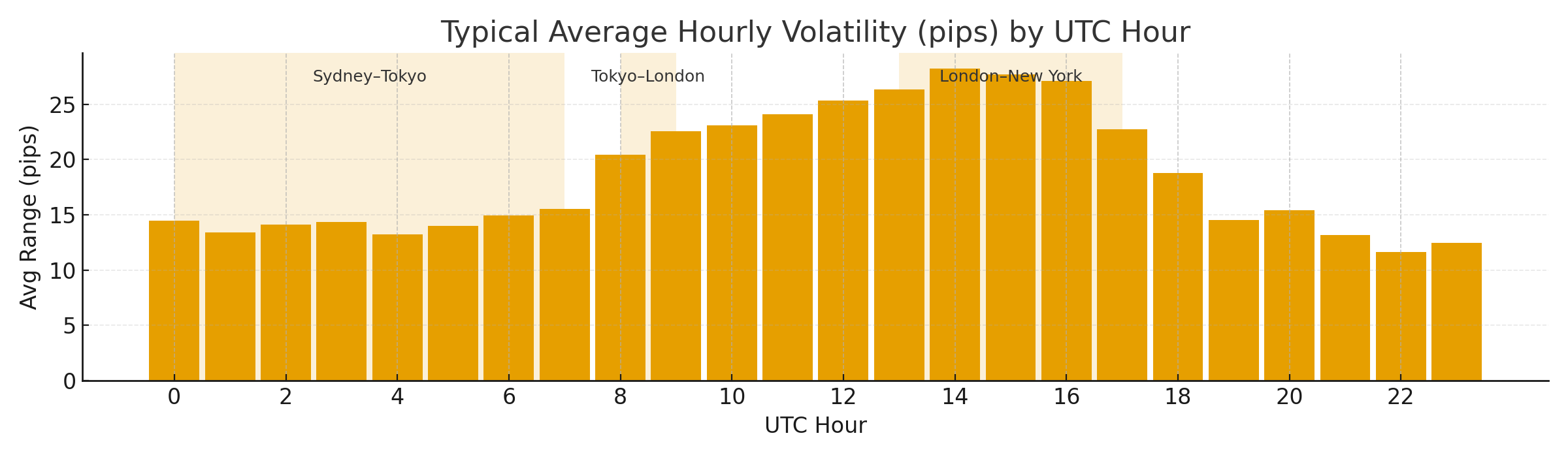
Not every hour is equal. Most tradeable movement happens during specific windows when liquidity is highest.
If your timing is wrong, your best setup will still fail. Volatility dictates stop size and target range.
Core concepts
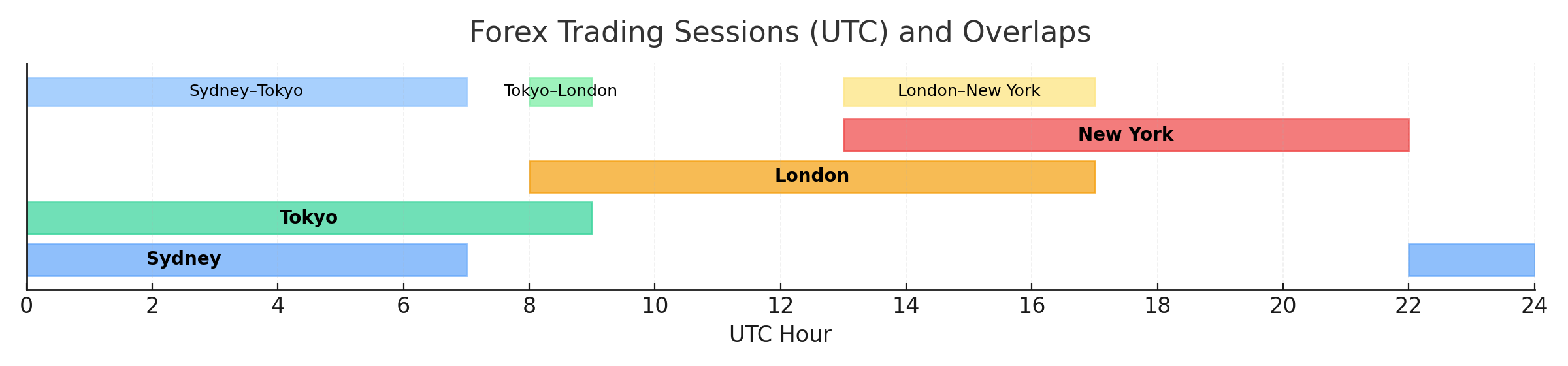
- London and New York overlap is the highest liquidity window.
- Asia is often range-bound with lower volatility.
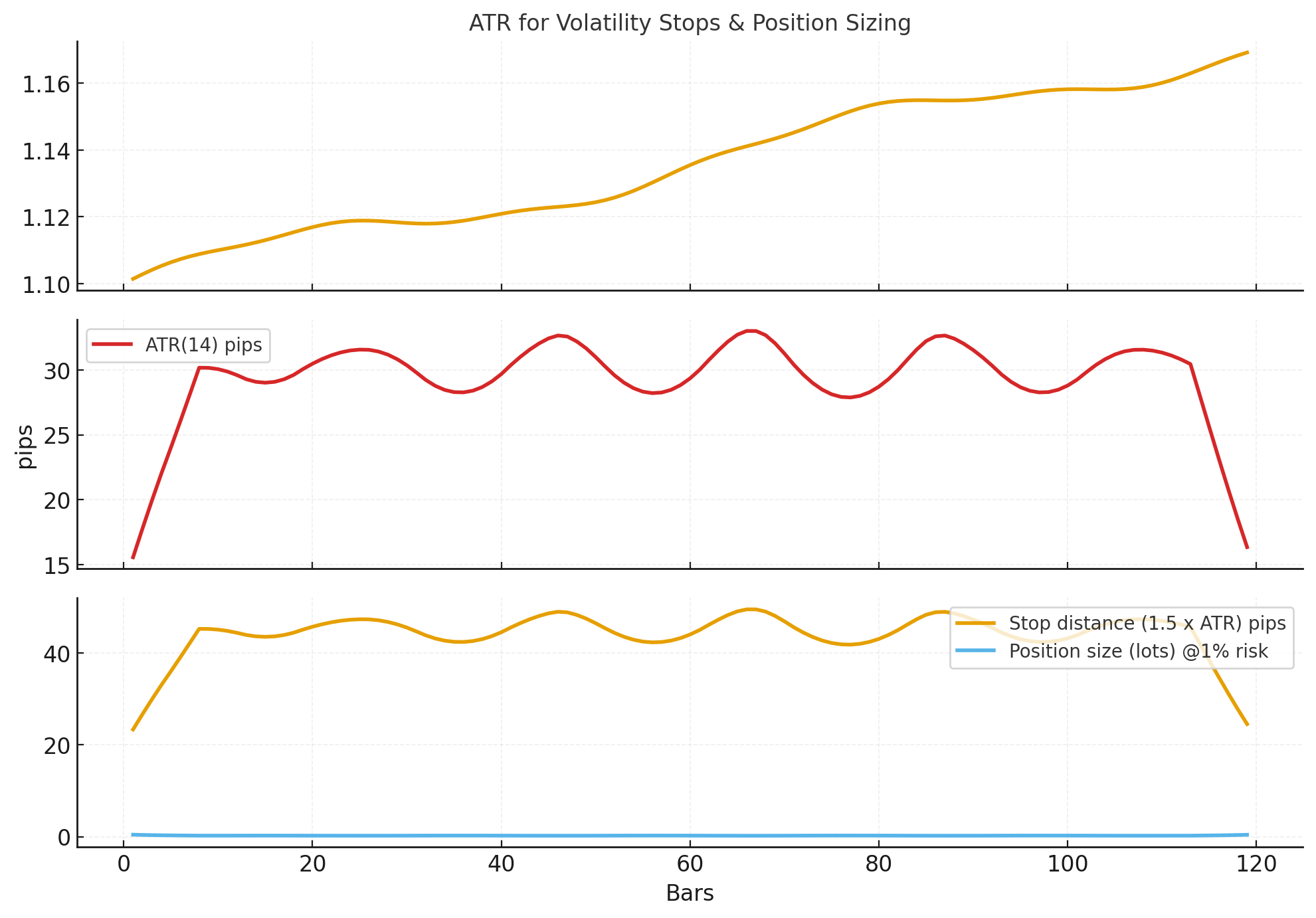
- ATR helps scale stops and targets to volatility.
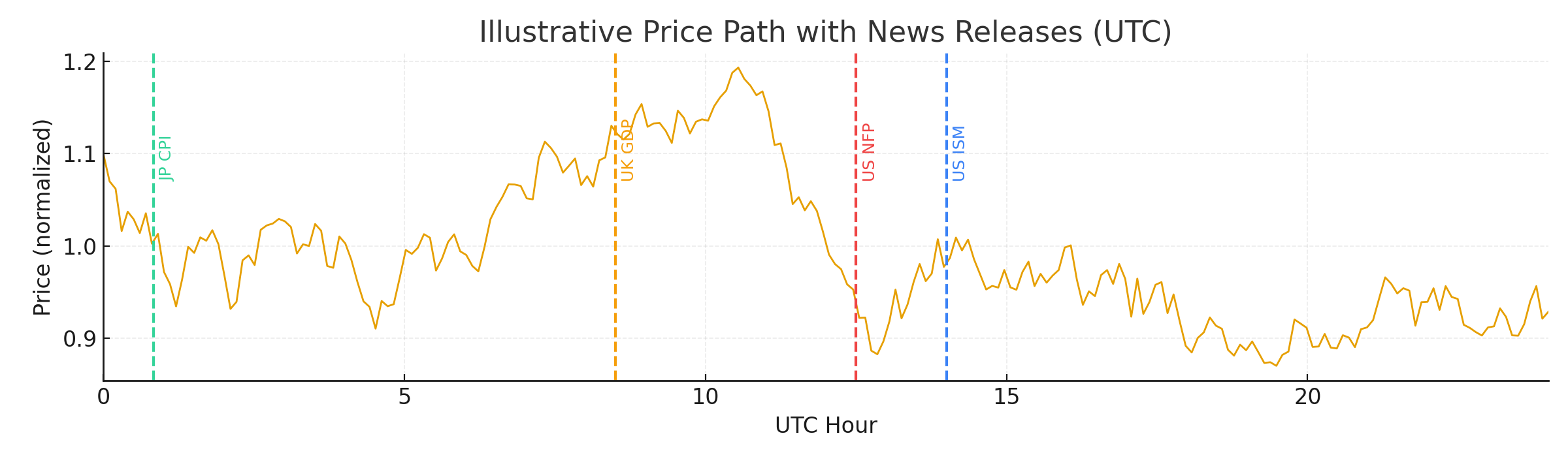
- News releases can distort spreads and fills.
- Session bias often follows the highest liquidity region.
Execution framework
- Pick the session window you will trade.
- Define volatility regime using ATR.
- Plan target size based on volatility.
- Wait for a clean trigger during the window.
- Stop trading after max loss or session close.
Annotated walkthrough
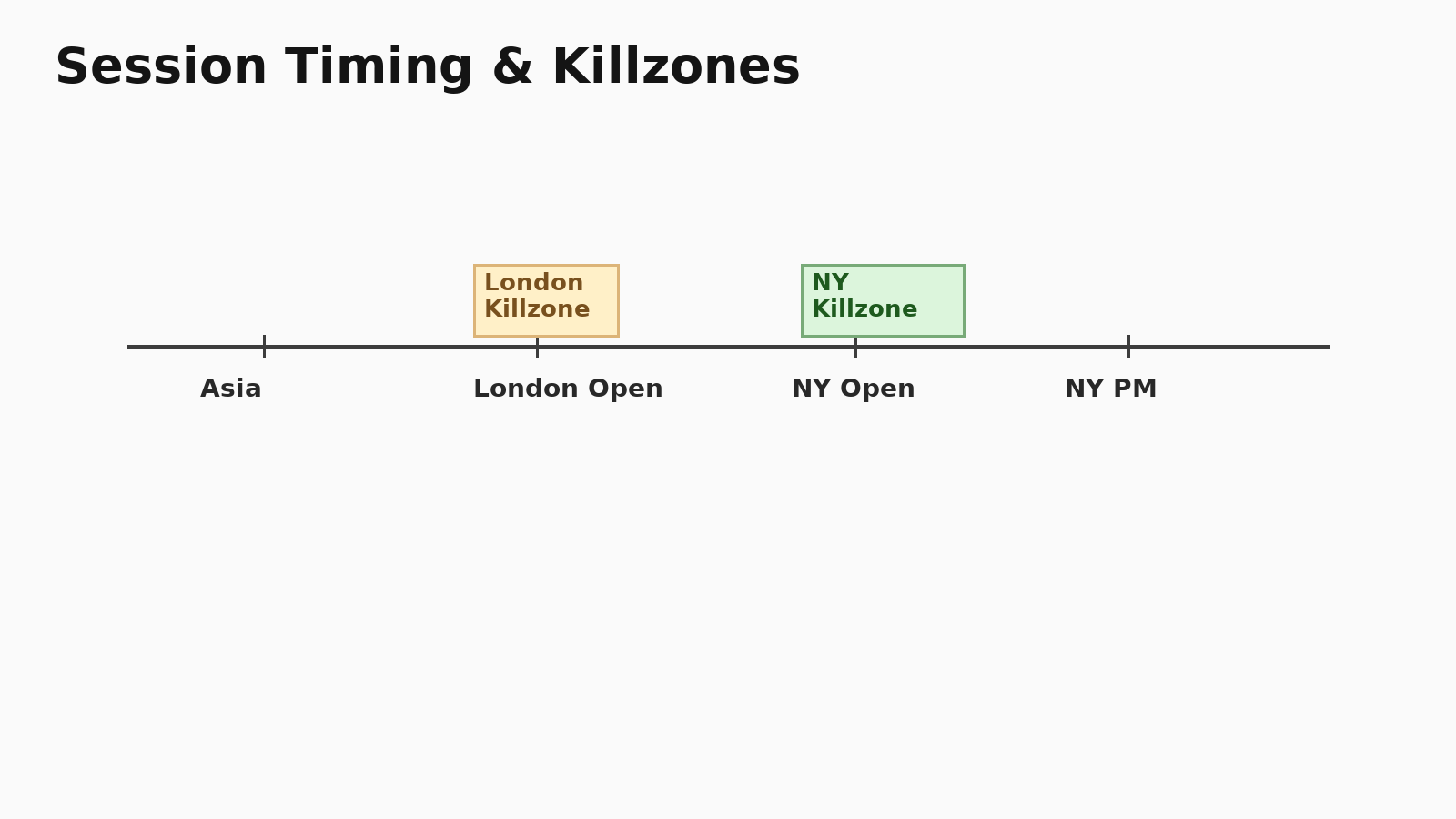
Example: London breakout after a tight Asia range.
- Box Asia highs and lows.
- Watch for a London sweep and reclaim.
- Enter on confirmation and target the next HTF level.
- Exit before liquidity fades.
Common mistakes
- Trading during dead hours.
- Ignoring ATR and using fixed stops.
- Trading into red news with tight stops.
- Overtrading outside your session plan.
Checklist
- Session window defined.
- Volatility checked with ATR.
- News window clear.
- Spread normal.
- Target aligned with volatility.
Practice drills
- Record ATR and range size across each session for five days.
- Collect three London breakout examples with notes.
- Track how spreads change before and after news.
Pro tips
- Trade fewer hours with more focus.
- Let volatility set the size of your move.
- Liquidity is the hidden edge.
Annotated Chart Pack
5+ annotated examples for this topic.
Download the lesson pack for offline study and practice.
Lesson Quiz
Pass mark: 80%