Published on January 29, 2026 | By Forex Insights Desk | 1 min read
Risk of Ruin Basics: Why Position Size Beats Predictions
Risk of ruin is the silent killer of retail accounts. Learn why smaller size protects the long game.
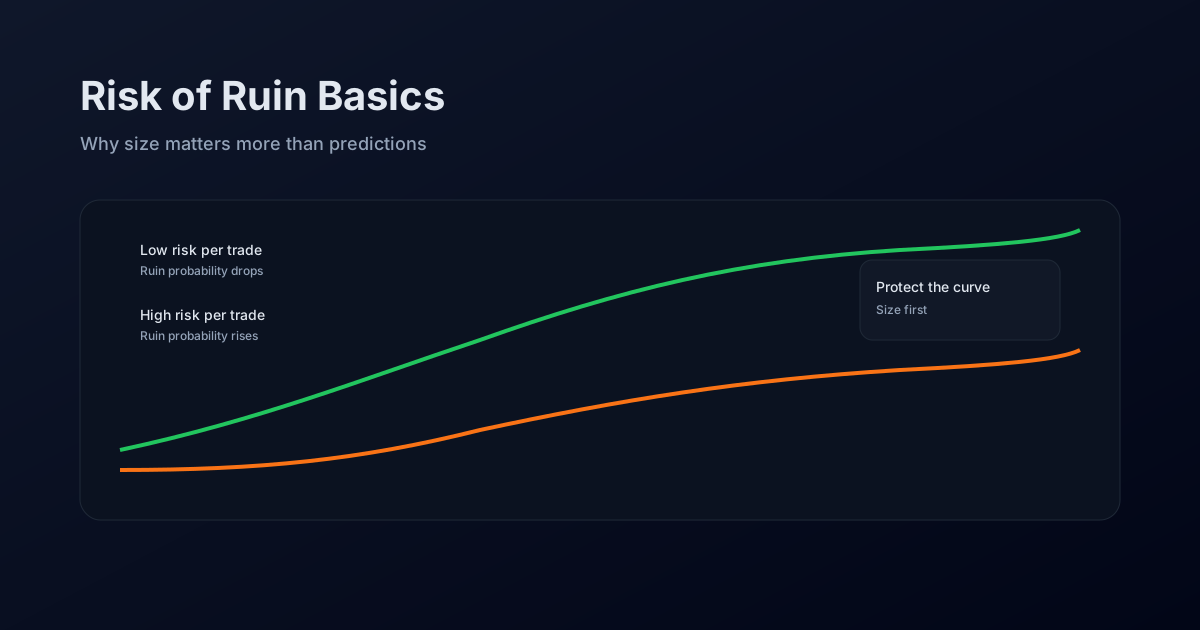
Risk of ruin is the probability that your account drops to a level where recovery is unlikely. It does not matter how good your strategy is if you size too large. Most blown accounts are not caused by bad predictions; they are caused by oversized risk.
The simple idea
The larger your risk per trade, the fewer losses it takes to damage your account. Even a strategy with a decent win rate can collapse if the drawdown is too large.
Why smaller size wins long term
- Smaller risk keeps you in the game during losing streaks.
- It reduces emotional swings and improves decision making.
- It allows time for the edge to play out over many trades.
A practical rule
Risk 0.5% to 1% per trade until you have a large sample size. If you cannot stay disciplined at 1%, you will not survive at 3%.
Combine with process
Risk control works best when paired with process: a checklist, a consistent session, and a single setup. That combination dramatically lowers the chance of ruin and increases the chance of long-term improvement.
In trading, survival is the first edge. If you protect your downside, your upside has room to grow.
Editorial note
Forex Insights blog posts are written as educational desk notes. They explain process, structure, execution, and risk management. They are not individualized trade recommendations and they do not guarantee trading results.
How to study this post
- • Pull up the same pair or structure on your chart and compare the levels.
- • Write down the setup or risk rule the article is reinforcing.
- • Test one idea over a small sample before changing your full playbook.
Questions to ask yourself
- • Would this idea still make sense in a different session or volatility regime?
- • Where is the invalidation, and does the stop fit your account rules?
- • Does this article improve your process, or are you just collecting theory?