Published on January 29, 2026 | By Forex Insights Desk | 2 min read
Spread and Slippage Reality Check: Protecting Signal Quality
Signals can look perfect and still fail if spreads widen or slippage spikes. Learn how to filter execution risk.
Signal quality is not just about analysis. It is also about execution. If your spread widens or you get filled late, a good trade can quickly turn into a loss. This is why professional desks treat spread and slippage as core parts of the strategy, not afterthoughts.
Why spreads widen
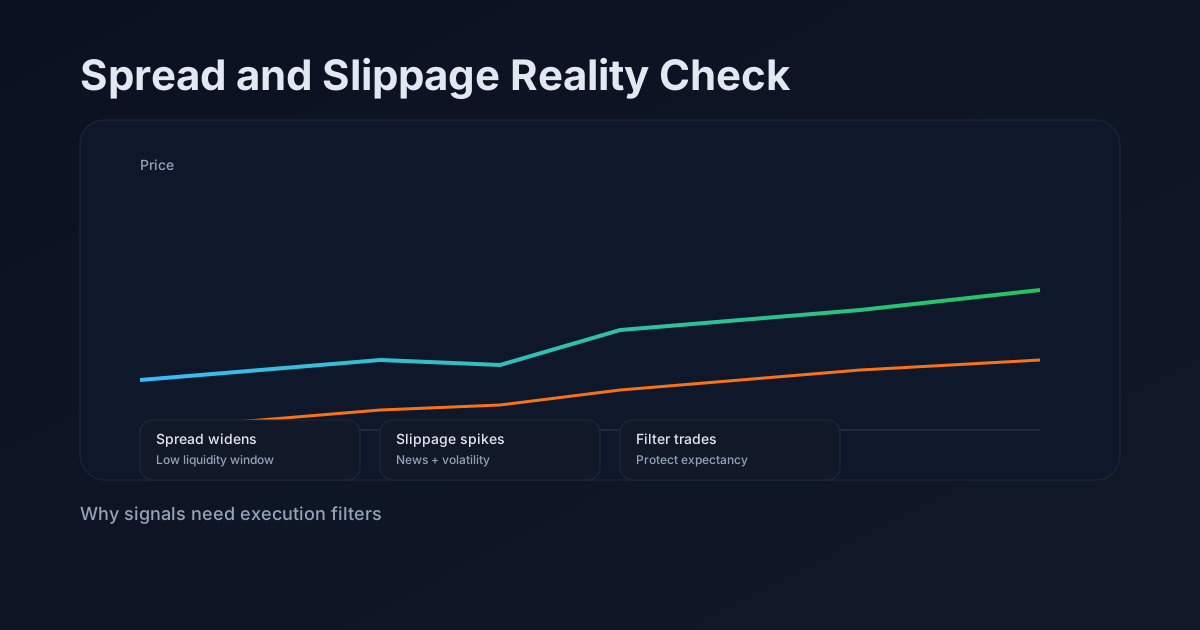
Spreads are not fixed. They widen when liquidity is thin, during news spikes, or when a broker is managing risk. If you trade in those windows, your entry price is worse and your stop is closer than you think.
- Early Asia session for GBP or USD pairs.
- Minutes before high-impact news releases.
- End of day rollover or maintenance windows.
Slippage is not random
Slippage increases when price moves fast or when order book depth is shallow. You can reduce it by trading only in deeper sessions and by avoiding entries right at the news release.
Practical execution filters
- Spread filter: skip trades if the spread is above your threshold.
- News filter: avoid entries within 5-10 minutes of tier-1 events.
- Session filter: trade only when your pair has real liquidity.
How to measure your real cost
- Record requested price vs fill price on every trade.
- Track average spread by session.
- Review the worst fills and note the time window.
Signals are still useful, but only with filters
A strong signal without execution filters is incomplete. The best setups still need the right environment. Think of signals as the idea and the filters as the safety system that protects the idea.
Editorial note
Forex Insights blog posts are written as educational desk notes. They explain process, structure, execution, and risk management. They are not individualized trade recommendations and they do not guarantee trading results.
How to study this post
- • Pull up the same pair or structure on your chart and compare the levels.
- • Write down the setup or risk rule the article is reinforcing.
- • Test one idea over a small sample before changing your full playbook.
Questions to ask yourself
- • Would this idea still make sense in a different session or volatility regime?
- • Where is the invalidation, and does the stop fit your account rules?
- • Does this article improve your process, or are you just collecting theory?