Published on January 29, 2026 | By Forex Insights Desk | 2 min read
The 4-Box Trade Plan: A Checklist for Consistent Execution
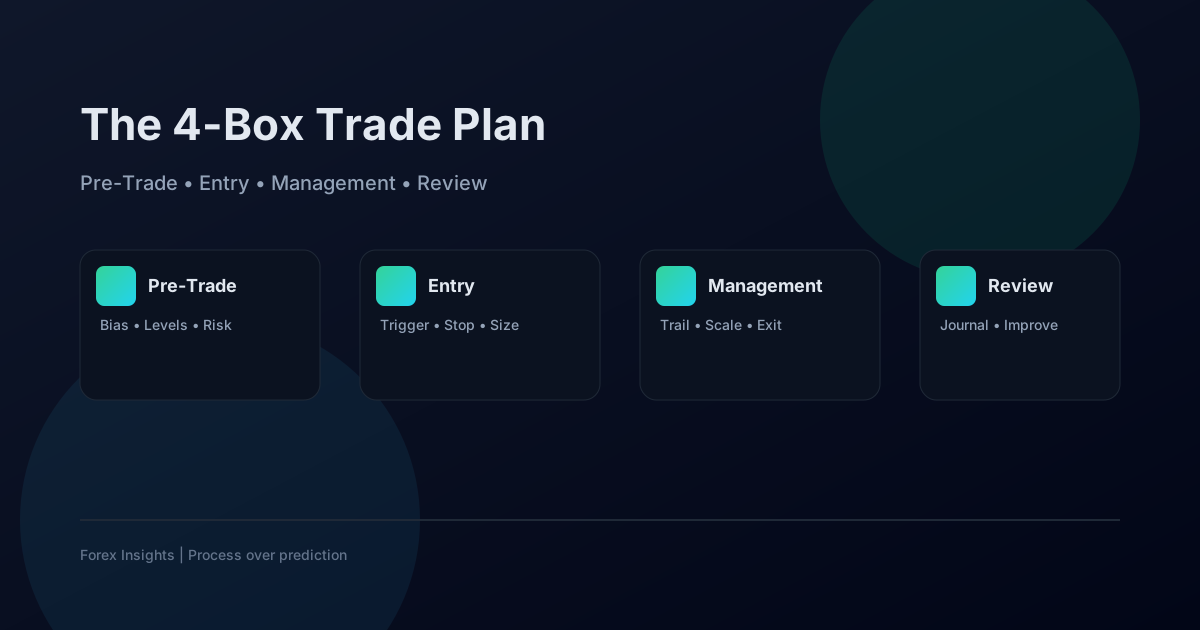
A simple four-stage plan that turns signals into repeatable execution: pre-trade, entry, management, and review.
Most traders do not fail because they lack indicators. They fail because they do not run a consistent process. The 4-box trade plan is a simple framework that keeps you disciplined even when the market is moving fast. It is intentionally boring: four boxes, four checks, repeat every trade.
Box 1: Pre-trade (plan before you click)
This is where most mistakes happen because people skip it. Pre-trade is not analysis overload; it is a short, strict checklist:
- Bias: What is the higher-timeframe direction?
- Level: Where is price relative to structure or liquidity?
- Session: Are you trading during your best liquidity window?
- Risk: What is the exact size and maximum loss?
If any item is unclear, you do not trade. This alone filters most low-quality setups.
Box 2: Entry (trigger, not guess)
Entry should happen only when a specific trigger is met. Triggers are different from predictions. A trigger is a condition you can identify without emotion.
- Break and retest at a clean level.
- Rejection candle at a liquidity sweep.
- Momentum confirmation after consolidation.
Define your stop before you enter. If you do not know where your stop goes, the entry is not valid.
Box 3: Management (protect the trade)
Trade management is not improvisation. You either have a plan or you do not. Decide the rules in advance:
- Will you trail? If yes, by structure or by ATR?
- Will you take partials? If yes, at what level?
- What invalidates the trade?
A strong trade is not one that wins. It is one that was managed exactly as planned.
Box 4: Review (learn from the data)
The review box is where real progress happens. After the trade closes, you answer three questions:
- Did I follow my plan?
- Was the setup clear or forced?
- What is one mistake or improvement?
Keep it short, honest, and repeatable. The goal is a feedback loop, not a diary.
A one-page template you can reuse
- Bias: _________
- Level: _________
- Session: _________
- Risk: _________
- Trigger: _________
- Stop / Target: _________
- Management rule: _________
- Review note: _________
If you apply this plan for 20 trades, your results will become more stable even if your win rate does not spike. Consistency comes from process, not prediction.
Editorial note
Forex Insights blog posts are written as educational desk notes. They explain process, structure, execution, and risk management. They are not individualized trade recommendations and they do not guarantee trading results.
How to study this post
- • Pull up the same pair or structure on your chart and compare the levels.
- • Write down the setup or risk rule the article is reinforcing.
- • Test one idea over a small sample before changing your full playbook.
Questions to ask yourself
- • Would this idea still make sense in a different session or volatility regime?
- • Where is the invalidation, and does the stop fit your account rules?
- • Does this article improve your process, or are you just collecting theory?