Published on January 21, 2026 | By Forex Insights Desk | 4 min read
Liquidity Sweeps Are Not a Conspiracy: The Mechanics Behind the Move
Stops are liquidity, not a conspiracy. Learn how sweeps form, how to trade the reclaim, and how to filter the best setups.
Liquidity sweeps are mechanics, not magic
Liquidity sweeps look like stop hunts because they run the exact levels everyone can see. That does not make them a conspiracy. It makes them a feature of how large orders are executed. The market moves to where the orders are. Those orders are clustered at obvious highs, lows, and round numbers. When price runs those areas and snaps back, it is not a trick. It is the market clearing inventory.
Where liquidity actually sits
Liquidity pools form where retail orders cluster. You do not need an order book to see it. Look for equal highs and equal lows, prior day levels, and round numbers. Those are the areas where stops and breakout orders stack. That is the fuel for the next move.

Why the market sweeps those levels
Big traders need size. Size needs liquidity. If price is sitting in a tight range, there is not enough liquidity at the mid. The only reliable pools are at the edges. So price pushes into those edges, fills orders, then either reverses or continues depending on the dominant flow. This is why a sweep can be a reversal or a continuation. The sweep itself is not the signal. The reaction is.
The stop run pattern
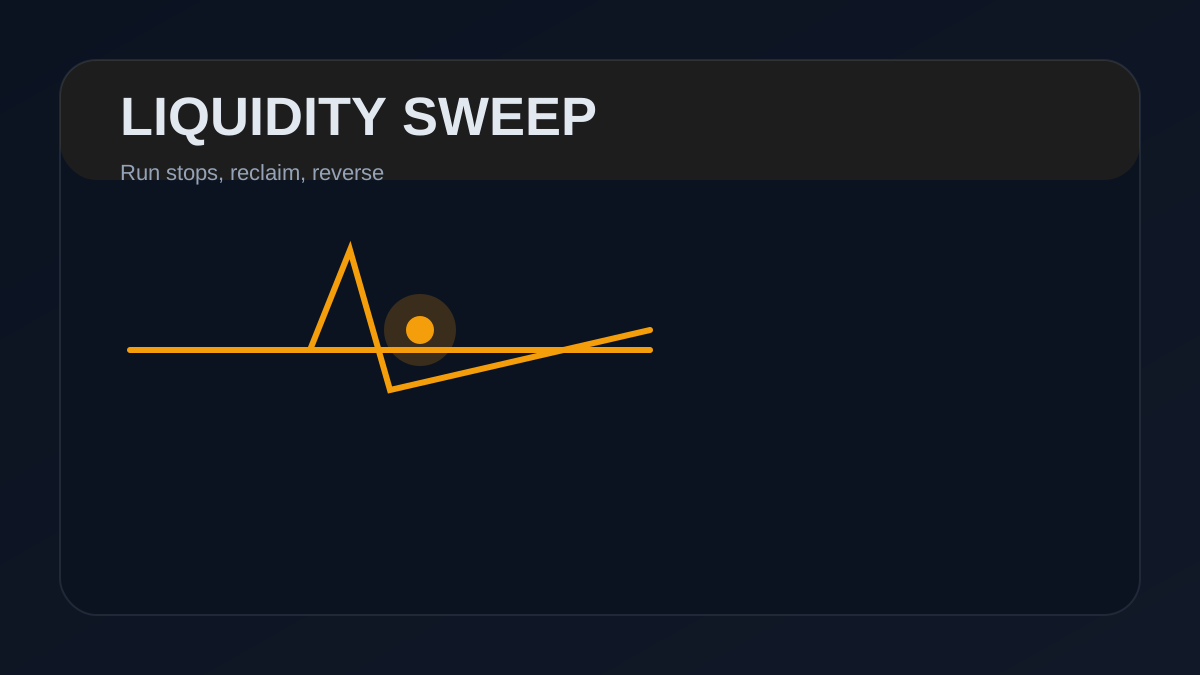
A classic sweep pattern has three phases:
- Build: price compresses under a visible level.
- Sweep: price spikes through the level, triggering stops.
- Reclaim: price closes back inside the range or level.
The reclaim is where the trade lives. If price does not reclaim, there is no trade.

Entry model: sweep + reclaim
The best sweep trades are the ones that reclaim quickly. That reclaim tells you that the sweep was for liquidity, not for a true breakout. The entry is after the reclaim candle closes. The stop goes beyond the sweep wick. The target is the opposite side of the range or the next major level.

External vs internal sweeps
Not all sweeps are equal. You must know what kind you are trading.
- External sweep: price runs a major swing high or low on H1 or H4. These can signal reversals.
- Internal sweep: price runs a minor swing inside a range or trend. These often signal continuation.
External sweeps are more powerful but less frequent. Internal sweeps are common and useful for timing entries in the dominant trend.

Stops that actually protect you
Most traders get swept because they place stops inside the liquidity pool. If your stop is inside the range or just on the level, you are asking to be taken out. On sweep trades, the stop must be beyond the wick. If you cannot afford that stop, reduce size. The stop is not negotiable.

Context filters that increase win rate
Not every sweep is tradable. Use context to filter:
- Trend bias: favor sweeps that align with higher timeframe trend.
- Session timing: sweeps during London and NY carry more weight.
- News risk: avoid sweeps directly before high impact data.
When trend, timing, and liquidity align, the sweep has edge. When they do not, it is just noise.
Case study: EURUSD internal sweep
EURUSD is in a steady H1 uptrend. Price consolidates for two hours under a minor swing high. London opens, price spikes above the minor high, then closes back inside. That is an internal sweep. You enter on the reclaim, stop beyond the wick, target the prior day high. The trend continues and the trade pays 2.5R. This is a textbook continuation sweep.
Case study: GBPJPY external sweep reversal
GBPJPY has been trending lower all week. Price reaches the prior week low, spikes below it during London, then reclaims. That is an external sweep of a major level. You enter on the reclaim, stop beyond the wick, and target the midpoint of the week. The reversal carries for 120 pips. This is a classic external sweep reversal.
Common mistakes and how to fix them
- Entering on the spike: wait for the reclaim close.
- Stops too tight: place beyond the wick or do not trade.
- No context: sweeps without bias are coin flips.
- Overtrading: you only need one good sweep per session.
Practical sweep checklist
- Is the level obvious and liquid?
- Did price sweep and reclaim quickly?
- Is the higher timeframe bias aligned?
- Is the stop beyond the wick and acceptable?
- Is there a clear target?
Daily practice drill
For the next 20 sessions, mark equal highs and lows on H1. Note every sweep and whether price reclaimed. Log the outcome. You will quickly see which sweeps are real and which are noise. That data builds your confidence and your edge.
Liquidity sweeps are not a conspiracy. They are a map of where orders live. Once you treat them as mechanics, you stop fighting the market and start trading with it.
Editorial note
Forex Insights blog posts are written as educational desk notes. They explain process, structure, execution, and risk management. They are not individualized trade recommendations and they do not guarantee trading results.
How to study this post
- • Pull up the same pair or structure on your chart and compare the levels.
- • Write down the setup or risk rule the article is reinforcing.
- • Test one idea over a small sample before changing your full playbook.
Questions to ask yourself
- • Would this idea still make sense in a different session or volatility regime?
- • Where is the invalidation, and does the stop fit your account rules?
- • Does this article improve your process, or are you just collecting theory?